


The write-in map of West Virginia just got bigger.
Former Delegate Ken Reed filed Tuesday as a write-in candidate for State Senate District 15, covering Hampshire and Morgan Counties and part of Berkeley County. He joins Vernon Criss in House District 12 as the second candidate to take a write-in route after losing a Republican primary in the first cycle of the closed primary.
He will probably not be the last unless things change by the 2028 cycle.
As of Tuesday’s write-in filing deadline, the WASP has confirmed the following write-in candidates have filed for November:
Rio Phillips, U.S. Senate. Ken Reed, Senate District 15. Vernon Criss, House District 12. Christopher Ratliff, House District 45. J. Pino, House District 50. William Vest, House District 50. Eric Walton, House District 50.
Seven write-in candidates, multiple districts, and one common thread.
Reed’s Case, In His Own Words
Reed was direct about why he filed. “This campaign is simple,” he said in his press release. “It’s about giving voters who were denied the chance to vote in the Republican primary an option, and about fighting to give this district a voice on issues like infrastructure and property rights.”
He went further on Facebook: “In the primary my opponents were able to legally disenfranchise a significant portion of my supporters. However, this alternative route empowers those same voters to make their voices heard and send a powerful message.”
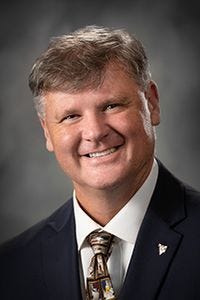
Reed is a local business owner with 70 employees in the Eastern Panhandle. He previously served as a Republican in the House of Delegates. His press release took direct aim at the incumbent he lost to: “I know what it means to sign the front of a paycheck. And unlike the incumbent in this race, I would have stood firm against HB 2014.”
HB 2014, the Power Generation and Consumption Act of 2025, stripped local zoning authority over high-impact data center buildouts and restructured how property tax revenue from those projects flows to local governments. The WASP has covered this legislation in depth, including a recent analysis of Treasurer Larry Pack’s data center impact report, which framed the law as a local control problem.
Reed also said voters deserve “someone who will go to the mat” for them, not “someone who serves the interests of the Governor and out-of-state special interests.”
Aside from his public statements, Reed did not immediately respond to our inquiries.
Who Reed Is Running Against
Senator Darren Thorne holds the Republican nomination for Senate District 15. He is a Hampshire County farmer who was appointed to the Senate seat in December 2024 by Governor Jim Justice, replacing Senate Judiciary Chair Charles Trump after Trump was elected to the Supreme Court. Thorne won the Republican primary in May to earn his nomination.

Thorne is on Senate President Randy Smith’s “Team Randy” fundraiser list. The WASP covered the Team Randy fundraiser in detail, noting that the list of who was included, and who was left out, reveals the fault lines heading into the 2027 legislative session.
“Ken Reed must be a glutton for punishment to want to be embarrassed twice at the ballot box in the same year. Ken lost his primary by nearly 20 points and will get absolutely demolished as a write-in. The district gave Donald Trump 72% of the vote in 2024. Darren Thorne will be re-elected no matter what Ken decides to do.” -- Source familiar to the Randy Smith Senate operation
The Closed Primary Connection
Reed’s decision to run as a write-in is not merely a political comeback attempt. It connects directly to a fight Reed was already waging inside the party before the primary.
Readers of the WASP will recognize Reed’s name from our coverage of the West Virginia Republican State Executive Committee’s winter meeting. When the committee convened on January 10, 2026, Reed made the motion to rescind the SEC’s 2024 resolution closing the Republican primary to unaffiliated voters. That motion was tabled by Sen. Jay Taylor’s motion to postpone indefinitely. Two separate requests for a secret ballot were denied. The closed primary stayed closed.
Reed lost that fight inside the party. He then ran in the first closed primary cycle and lost his Senate race by nearly 20 points to Thorne.
Now he is making the same argument at the ballot box that he made at the microphone in January: the closed primary locked out voters who should have had a say.
The WASP wrote about the closed primary and the January meeting in depth in “The Primary Is the Election.” Reed was the catalyst for the most consequential procedural fight of that meeting. His write-in campaign is, in a direct line, the continuation of that fight by other means.
What Comes Next
The write-in filings are in. The November ballot is set. A few candidates have decided the primary result was not the final word.
Whether any of them succeed is a separate question. Write-in campaigns in legislative races almost never succeed. The district voted for Donald Trump with 72% of the vote in 2024. Thorne has party infrastructure, the Team Randy network, and the name recognition of incumbency.
But Reed is asking a question the WASP has been asking all year: did the closed primary produce nominees the broader electorate actually wanted? District 15 in November will be one of several answer keys.
Note: The WASP is continuing to report on Ken Reed and the write-in landscape. Information is flowing our way and we are working sources for a significant headline related to his seat on the Republican Executive Committee. More to come. 🐝
The WV WASP is a West Virginia political news, humor, and commentary outlet. wvwasp.com | @wvwasp on X.