

Every campaign understands that a popular governor helps his party. The corollary is less discussed: an unpopular one can make the environment harder for candidates who never asked for the trouble.
State Navigate, a nonpartisan election analytics firm founded by political analyst Chaz Nuttycombe, has released district-level polling in two of West Virginia’s most competitive Senate races, with full crosstabs. The WASP has reviewed both data sets.
The headline finding is not that Republicans are losing. They aren’t. Lance Wheeler leads in SD8. Senator Laura Wakim Chapman leads in SD1. The question the data raises is why those leads feel smaller than a Republican-leaning state should produce, and what the crosstabs reveal about the environment those candidates are navigating.
Senate District 8
In Senate District 8, covering parts of Kanawha, Putnam, Clay, Jackson, and Roane counties, State Navigate found Republican Lance Wheeler leading Democrat Kim Hundley 46 to 40, with 14 percent undecided. The survey of 837 likely voters was conducted September 30 through October 1.
Those toplines do not fully capture the environment Wheeler is operating in.
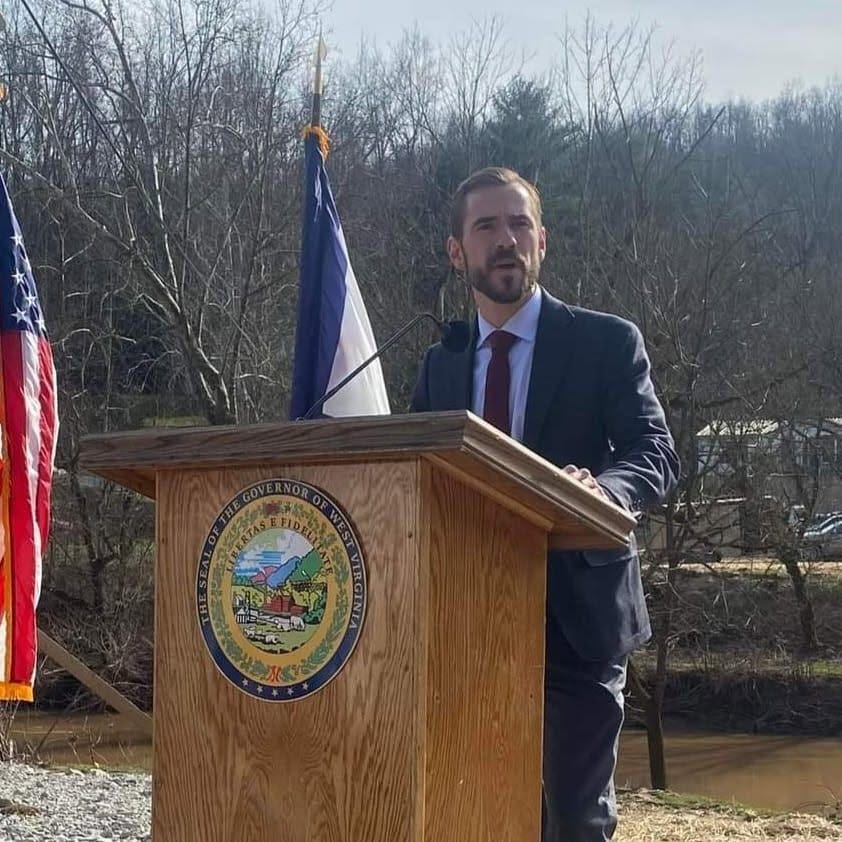
Governor Morrisey sits at 31 percent approval and 61 percent disapproval in the district, a net of minus 30. Forty-five percent of voters say they are less likely to support a Morrisey-endorsed candidate, including 36 percent who say “much less likely.” Only 16 percent say an endorsement makes them more likely to support a candidate. Morrisey won SD8 by 11 points in November 2024. Less than two years later, his approval in the district is underwater by 30 points.
SD8: Morrisey 31% approve / 61% disapprove. Net minus 30. 45% of voters less likely to support a Morrisey-endorsed candidate; 36% say “much less likely.”
The polling does not measure whether voters would transfer that hostility to Wheeler specifically. But what it does capture is the environment Wheeler is running in: a district where nearly half the electorate is already predisposed against the governor’s endorsement, and where the governor’s own numbers have collapsed at every level of the county breakdown.
Kanawha County, which accounts for 53 percent of the district’s electorate, has Morrisey at 25 percent approval and 69 percent disapproval, a net of minus 44. Putnam County (17 percent of the district) is at 35 approve, 56 disapprove, a net of minus 20. Clay County (8 percent) sits at 35 approve, 60 disapprove, minus 25. Jackson County (10 percent) at 39 approve, 49 disapprove, minus 10. Roane County (13 percent) is the least hostile, at 42 approve, 48 disapprove, minus 5. There is not a single county in SD8 where Morrisey is net positive.
Kanawha County (53% of SD8 electorate): Morrisey 25% approve / 69% disapprove. Net minus 44.
The gender gap is notable. Male voters approve of Morrisey 42 to 53, a net of minus 11. Female voters approve 22 to 67, a net of minus 45. Among voters with a four-year college degree or more, approval runs 22 to 72, a net of minus 50. Vocational and technical school graduates are the one education segment where he is net positive, at 52 to 41.
SD8 gender gap: Men, Morrisey net minus 11. Women, Morrisey net minus 45. College graduates: net minus 50.
Trump also sits underwater in SD8. His approval is 45 to 52 disapprove, a net of minus 7, in a district he won by 27 points in 2024. Among Trump 2024 voters still in the electorate, Morrisey runs 49 approve to 42 disapprove. That relative strength within his own base is the floor.
The 14 percent undecided is worth examining. Those voters broke Trump 53 to 25 in 2024, mirroring the district average. But their Morrisey approval is 26 to 56, and 26 percent say his endorsement makes them much less likely to support a candidate. The undecideds lean Wheeler on partisan history, but they are not a friendly pool for either candidate.
SD8 head-to-head: Wheeler (R) 46% vs. Hundley (D) 40%. 14% undecided. Undecideds: Morrisey 26% approve / 56% disapprove.
Wheeler wins 80 percent of Trump approvers. Hundley wins only 5 percent of Trump voters. Wheeler enters the race with a meaningful advantage.

The top two issues for SD8 voters are the economy and cost of living at 32 percent, and candidate qualities and good governance at 16 percent. Immigration, often cited as a dominant Republican issue, comes in at 4 percent. The data centers and AI category, which Morrisey has made a centerpiece of his economic messaging, registers 7 percent. Cost of living is the issue voters say they care about most, and the governor is running at net minus 44 in the county that makes up more than half the district.
Senate District 1
Senate District 1 in the Northern Panhandle is a closer race than its topline suggests.
State Navigate has Republican incumbent Laura Wakim Chapman leading Democrat Shawn Fluharty 48 to 43 overall, with 9 percent undecided. Among voters who say they will definitely vote, that lead shrinks to 47 to 45. The survey of 884 likely voters was conducted September 28 through 29.
SD1 head-to-head: Chapman (R) 48% vs. Fluharty (D) 43%. Among “definitely voting” voters: Chapman 47%, Fluharty 45%.

The county geography here runs opposite to SD8 in one important way. In SD8, Morrisey is underwater in every county. In SD1, he is net positive in three of four counties. The problem is which county he’s not.
Morrisey runs 47 approve to 39 disapprove in Hancock County (29 percent of the district), net plus 8. He runs 48 to 41 in Brooke County (21 percent of the district), net plus 7. He runs 45 to 42 in Marshall County (8 percent), net plus 4. In those three counties, Chapman leads comfortably. Hancock and Brooke both go 51 to 38 for Chapman. Marshall goes 56 to 35.
Ohio County is the problem. Ohio County accounts for 42 percent of the district’s electorate and contains most of Wheeling. Morrisey runs 41 approve to 50 disapprove in Ohio County, net minus 9. Fluharty leads Ohio County 50 to 42.
Ohio County (42% of SD1 electorate): Fluharty leads 50-42. Morrisey net minus 9. He is net positive in the three smaller counties Chapman is already winning by double digits.
The geographic overlay is unfavorable for Chapman: Morrisey is a modest liability in the one county she most needs to hold down, and a relative asset in the three smaller counties she is already winning by double digits.
The intensity gap compounds the picture. Fluharty supporters say they will definitely vote at an 89 percent rate. Chapman supporters at 83 percent. That six-point motivation gap matters in a race that is already only 47 to 45 among voters who say they will definitely vote.
Fluharty supporters: 89% definitely voting. Chapman supporters: 83% definitely voting. Six-point motivation gap in a race that is already 47-45 among definite voters.
Independents are breaking toward Fluharty. Among party ID push leaners classified as independent, Fluharty leads 55 to 15. Among voters registered as independent or other, Fluharty leads 54 to 27.
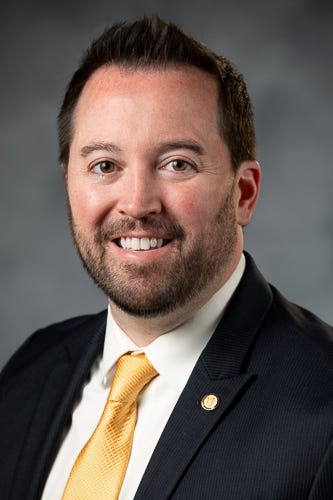
District-wide, Morrisey sits at 44 approve, 44 disapprove. Thirty-two percent of voters say his endorsement makes them less likely to support a candidate, and 26 percent say “much less likely.” That 32 percent is lower than SD8’s 45 percent, but it is still a drag in a district where Fluharty needs to find crossover voters and is already finding them at a 12 percent rate among Trump 2024 voters.
Trump’s net approval in SD1 is plus 2. He won the district by 39 points in 2024.
Who is State Navigate?
State Navigate is the work of Chaz Nuttycombe, a 27-year-old analyst who founded the organization in December 2024 after operating previously under the name CNalysis. It is structured as a 501(c)(3). Nuttycombe has developed a reputation for granular down-ballot survey work in states that national polling firms typically ignore.
His methodology uses text-to-online surveys weighted by gender, race, age, education, party registration, and state house district. The surveys are not commissioned by campaigns or parties. Prior State Navigate primary polling in West Virginia received an A- grade, matching the SD8 primary margin to the point and coming within 6 points on the SD1 primary result.
The Structural Picture
Wheeler is ahead. Chapman is ahead. Republicans remain favored in both races. What State Navigate’s data captures is why those advantages feel smaller than the partisan baseline of these districts should produce.
In SD8, Morrisey’s collapse is district-wide and concentrated most heavily in the county that makes up more than half the electorate. That is not a condition any individual candidate created or can fix. Whether that hostility transfers to Wheeler is a question the polling does not directly answer. What it does answer is that Wheeler is running in a district where the governor who endorsed him is underwater by net minus 44 in Kanawha County, and where nearly half of all voters say his endorsement makes them less likely to support someone. That is the environment.
In SD1, Chapman’s challenge is more specific. She is winning three of four counties and running up margins in the rural parts of the district. The problem is that Ohio County, which is 42 percent of the vote, is going the other way, with a governor who is a net liability there and a Democratic candidate who is already pulling crossover voters. The intensity gap means the race among the people most likely to actually vote is already 47 to 45.
The 2028 dynamic between Morrisey and Senator Jim Justice is a story the WASP has been tracking all year. The November races are more immediate. Republicans Wheeler and Chapman both hold leads. Neither is operating in a wave environment.
What State Navigate’s data makes clear is that Republican candidates in competitive districts this year are not running with the wind at their backs. 🐝
The WV WASP is a West Virginia political news, humor, and commentary outlet. wvwasp.com | @wvwasp on X.