

While West Virginia’s political world spent the summer consumed by the Justice-Morrisey feud, the Greenbrier deal, and the write-in filings that followed the closed primary, one storyline from May never got the attention it deserved.
Randy Smith won.
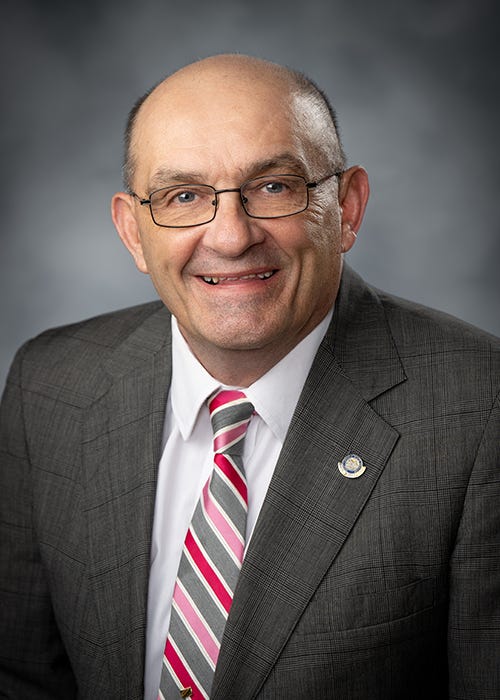
When the dust settled on the May 12 Republican primary, Senate President Randy Smith and his operation had swept all nine of the Senate races where the caucus engaged. Districts 1, 2, 3, 3-Special, 6, 8, 9, 14, and 15 all went to Smith-aligned candidates. The gavel he holds going into the 2027 session is not just intact. It is reinforced.
“Randy’s team has never, as far as I can tell, been given credit for sweeping all the races identified, correctly, as the ones critical to control of the chamber.” -- Source close to the Randy Smith Senate operation
That is a fair complaint. The WASP has covered the Senate civil war in depth, and the side that won the decisive races deserves to have that win acknowledged clearly. So here it is: Randy Smith ran a disciplined, targeted operation in a chaotic primary environment and delivered the results he needed. That is harder than it looks.
What the Sweep Actually Required
The 2026 Republican Senate primary was not a genteel affair. MetroNews tracked seven PACs that spent nearly $5 million across the Republican primary cycle. Competing factions recruited candidates and spent money to contest preferred picks across multiple districts. Outside money flowed in from donors who had never set foot in West Virginia.
Against that backdrop, winning all nine targeted races required Smith’s operation to correctly identify which races mattered most, recruit or support credible candidates in each of them, and execute a coordinated operation across multiple districts simultaneously. They did all three.
In District 1, Laura Wakim Chapman held off a primary challenge. In District 2, Toby Heaney survived. In Districts 3 and 3-Special, Smith-aligned candidates prevailed in both races. In District 6, Mark Maynard won. In District 8, Steven Eshenaur was blocked out. In District 9, Rollan Roberts won. In Districts 14 and 15, Jay Taylor and Darren Thorne came through.
Nine races. Nine wins. In a primary where nearly $5 million was moving around and factional tensions were as high as anyone in Charleston could remember, that is a record worth noting.
A Nuance Nobody Has Published
Here is something the WASP has not previously reported: Smith’s operation never went after incumbent Republican senators, even those who did not support him for Senate President, save for one.
Vince Deeds of Greenbrier County was not targeted by Smith’s caucus. The person targeting Deeds was Governor Patrick Morrisey. Eric Tarr of Putnam County was not targeted. Bill Hamilton of Upshur County was not targeted. Despite holding positions that put them at odds with Smith’s leadership priorities, and despite significant outside PAC spending flowing into some of their races from Morrisey-linked groups, Smith’s operation stayed out.
The one exception was Tom Takubo of Kanawha County. Takubo had challenged Smith for the Senate Presidency and then actively recruited candidates to run against Smith’s preferred picks in other districts. The caucus responded by supporting a primary challenger against him. Takubo won anyway, even though Smith aligned groups drained hundreds of thousands of dollars to defeat him.
The distinction matters. The narrative that Smith’s operation spent the primary cycle trying to purge disloyal senators is not accurate. Smith went after Takubo because Takubo came after him. He left the others alone.
“We never went after our incumbents other than Takubo. Takubo was because he recruited against us. We didn’t go against senators even though they didn’t support Randy.” -- Source close to the Randy Smith Senate operation
That is a more nuanced picture than most coverage of the Senate civil war has captured, including our own coverage.
The One Loss
As we pointed out, Smith’s operation was not perfect. The caucus engaged on the District 17 Special election and was supportive there. But in District 17’s regular primary, the effort to unseat Takubo came up short. Takubo won and will be back in January.
The truth is, this is a very strong primary record. The question for January is whether Smith’s caucus can work with the senators who survived outside of his operation’s preferred outcomes, which, by his own account, he never tried to remove in the first place.
What November Looks Like
Smith goes into the general election with nine critical races won, his caucus intact, and the organizational credibility that comes from running a primary operation that delivered.
The official Senate Republican Caucus fundraiser, hosted by Smith and Senate Majority Leader Patrick Martin on September 14 at Robinson Capitol Consulting in Charleston, tells a notably broader story than earlier lists that were circulating. The official caucus flyer includes Vince Deeds, Bill Hamilton, Mike Oliverio, and Zack Maynard, senators the WASP had previously noted were absent from an earlier Team Randy list that was making the rounds. Eric Tarr is absent from both.
A source tells the WASP that it was Sen. Jay Taylor, not Smith directly, who was circulating the earlier, more exclusive list. The distinction between what Taylor was sending around and what Smith’s official caucus is now backing heading into November is one the WASP will have more to report on. Watch this space.
What the margin numbers look like on November 3, and what they signal about relative strength heading into the organizational meeting in January, will matter as much as the wins themselves.
Smith won the primary season. The general election is a formality in most of these districts. January is the real test, and Smith is walking into it from a stronger position than his critics would acknowledge. 🐝
The WV WASP is a West Virginia political news, humor, and commentary outlet. wvwasp.com | @wvwasp on X.