The Marshall University Board of Governors called a special meeting Wednesday morning. By the time it adjourned, the Women’s Swimming and Diving program was alive again.
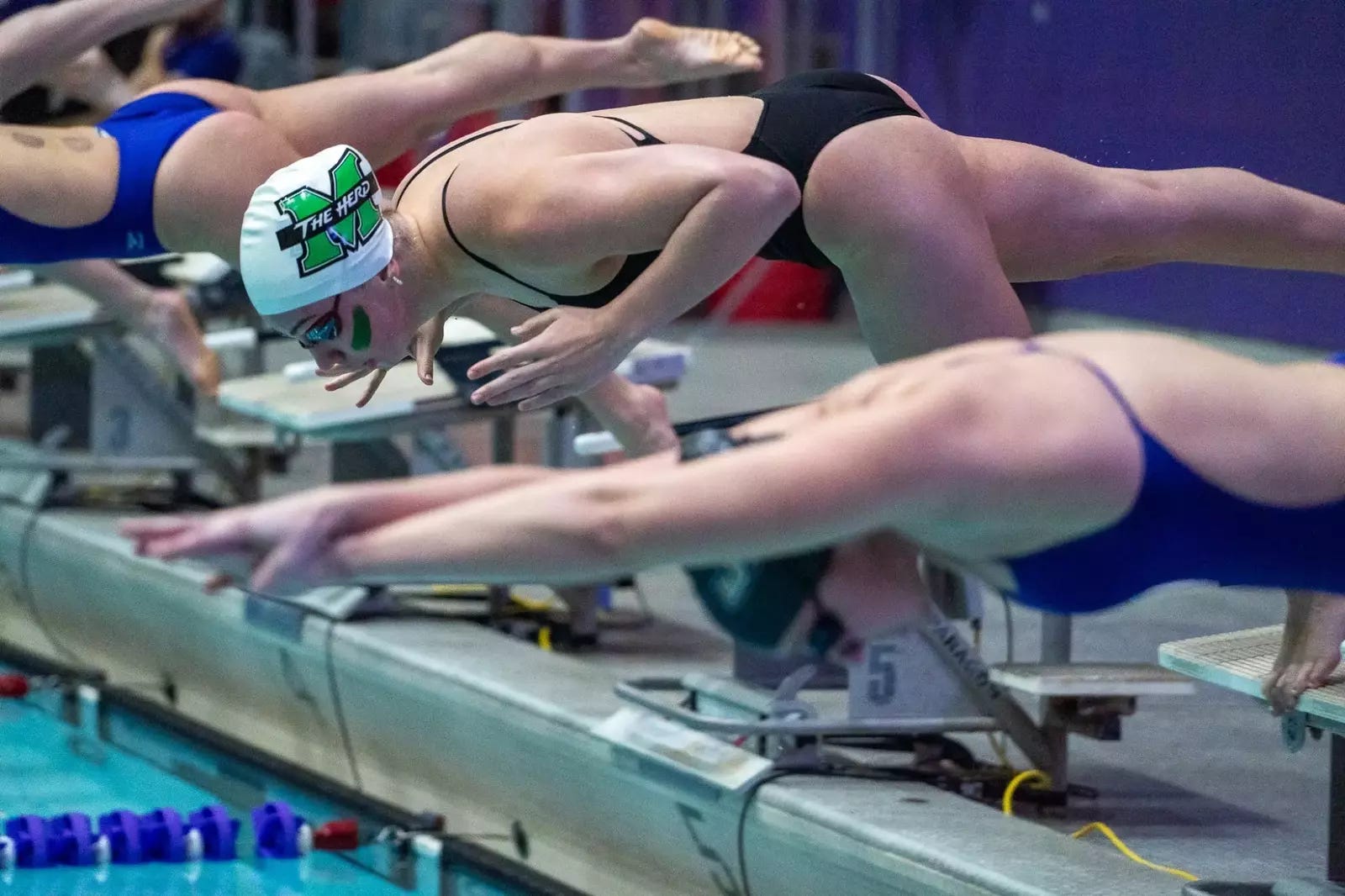
Less than three weeks after a unanimous board vote to eliminate the team, the same institution reversed itself in another unanimous vote. President Brad Smith announced that the program will continue, that the university will add STUNT as a varsity sport as planned, and that a “broader participation and financial strategy” for women’s athletics is in development. Smith credited new external Title IX consultation with changing the university’s recommended course of action, not its goals.
“When new information changes the pathway forward, responsible leadership reassesses,” Smith said Wednesday.
That is one way to put it.
The other way to put it: fifteen of those athletes filed a federal Title IX lawsuit that the university’s own attorneys apparently found persuasive in a hurry. The case, Dodd v. Marshall University, alleged that Marshall was already shortchanging women by as many as 250 participation opportunities per year before the cut. Eliminating a women’s program on top of an existing Title IX gap, lead attorney Joshua Hammack had said, is “not an especially close case.”
It turns out Marshall agreed.
Junior team captain Allison Dodd, the lead plaintiff, put it more graciously than she had to. “We are really happy Marshall is not only keeping our team but is going to help us make the team stronger for the long term,” she said. “We are also thankful for the tremendous support we got from alumni, our families, and the Marshall community.”
Her attorney offered similar measured optimism. “Today is a good day for the Swimming and Diving team, for the broader Marshall community, and for women everywhere.”
The WASP covered this fight in detail when SB 502, the Women’s Collegiate Sports Protection Act, was racing through the House Education Committee on a fast track in the final days of the 2026 regular session. The bill, sponsored by Sen. Jay Taylor (R-Taylor), creates a permanent endowment framework for women’s collegiate Olympic sports at West Virginia’s public Division I universities. The principal is untouchable. Only investment earnings can be spent, and only on direct program costs: scholarships, coaching, equipment, facilities, and travel.
The bill passed the House 96-0 on March 13, the final day of session , after completing legislative action in the Senate and heading to the governor’s desk . It passed the Senate 33-0 on March 3. Combined, that is 129 legislative votes in favor and zero against.
West Virginia has not sent a more unanimous message to its universities in some time.
Taylor’s big wish is a women’s softball program at WVU, and he was cautious about timelines, but the logic of what he built is plain enough: when the endowment framework is in place and funded, the next athletic director who wants to cut a women’s program to move money toward football travel will have a harder conversation with a donor community that has built something permanent. You cannot raid an endowment principal for football charter flights. That is the point.
The connection between SB 502 and Marshall’s reversal is not direct in a legal sense. The bill was sent to the governor’s desk; it has not been signed into law yet. The endowment structure it creates does not exist yet. No dollar has been raised under it.
But the political environment it created is real, and Marshall’s attorneys were navigating it.
Sen. Taylor had said explicitly that an endowment fund could have been used to help the Marshall Swimming and Diving program, and expressed hope that the framework would give the university a reason to reconsider . That framing, delivered publicly and repeatedly during the legislative debate, put Marshall in an uncomfortable position: here is a tool the state is building specifically to prevent what you just did. Now what?
Add the lawsuit. Add 96-0 in the House. Add the swimmers showing up at the Capitol and testifying before the Education Committee while their team was already in the transfer portal. Add the Marshall alumni letter to the committee urging that institutions eliminating women’s programs be required to demonstrate reinstatement pathways before receiving state funding. That is a lot of pressure converging on a university that was already on legally shaky ground.
Marshall Athletic Director Gerald Harrison, for his part, sounded like someone who had absorbed the situation fully. “College athletics is changing rapidly, and universities across the country are navigating complex financial, legal, and competitive pressures,” he said Wednesday. “Effective leadership requires both strong principles and the willingness to adapt when new information emerges.”
That is institutional-speak for: we heard you.
The original WASP piece on SB 502 argued that West Virginia was building a second pillar under the “save women’s sports” banner, one focused on funding and opportunity rather than eligibility restriction. The Save Women’s Sports Act of 2021 answered the question of who gets to play. SB 502 answers a different question: whether women’s sports exist to play in the first place.
Marshall’s reversal is evidence that both questions matter, and that when the state answers them with the force of unanimous legislative votes and federal litigation, universities listen.
The Marshall swimmers did not just save their team. They catalyzed a statewide policy response that outlasts their careers at the school. Whatever happens next in college athletics, the endowment framework exists now in West Virginia. The legal precedent from their willingness to fight exists. The political record of 129-0 exists.
Smith said Wednesday that the decision “is not about stepping away from our goals.” He is right, though perhaps not only in the way he intended. The goals of the swimmers, the Marshall alumni, the West Virginia Legislature, and the Title IX bar all pointed the same direction. Marshall eventually looked at that alignment and did the math.
The program is alive. The bill is on the governor’s desk. The work, as always, continues.
The West Virginia WASP is a West Virginia political news, humor, and commentary outlet. Follow @wvwasp on X. 🐝