


The Cabell County jury that convened on Wednesday to decide the fate of Jan Hite King and Kimberly Maynard did not take long.
Both women were convicted of one count each of false swearing in connection with the 2022 primary election. Sentencing is scheduled for October 23, 2026, at 1:00 p.m. Each count carries a maximum penalty of up to one year in prison and a fine not exceeding $1,000.
The WV WASP covered this case in depth earlier this year in our piece “They Knew Where They Lived.” The conviction today is the final chapter of a story that has dragged through four years, two civil lawsuits, a grand jury, a circuit court dismissal, a West Virginia Supreme Court reversal, and finally a jury verdict.
For readers who missed our earlier coverage, here is the short version.
How We Got Here
King and Maynard filed in February 2022 to run for the Cabell County Commission, each swearing under oath that they lived in Magisterial District 1. The Secretary of State’s office determined that King actually lived in District 2 and Maynard in District 3. Under West Virginia Code Section 7-1-1, candidates must live in the district they seek to represent.
Both women had attended the redistricting meeting years earlier where the county commission redrew its magisterial district lines following the census. According to Commissioner Kelli Sobonya, they spoke at that meeting and objected to the new map. The recorded testimony made any claim of ignorance about district lines difficult to sustain.
When the Secretary of State’s investigation surfaced the residency problem before ballots were printed, the former Cabell County Clerk gave both women ample time to voluntarily withdraw. They refused. The bipartisan ballot commissioners intervened and removed them from the ballot. The matter was referred for prosecution.
Rather than accepting that outcome, King and Maynard filed civil lawsuits in 2023 against the County Commission and county employees, alleging constitutional violations and pain and suffering. Those cases were removed to federal court and dismissed in 2024. The legal defense cost Cabell County taxpayers more than $38,000.
A Cabell County grand jury indicted both women in April 2025. The circuit court dismissed the indictment, ruling that a general one-year misdemeanor statute of limitations applied and the prosecution was too late. The State, represented by Attorney General JB McCuskey’s office, appealed.
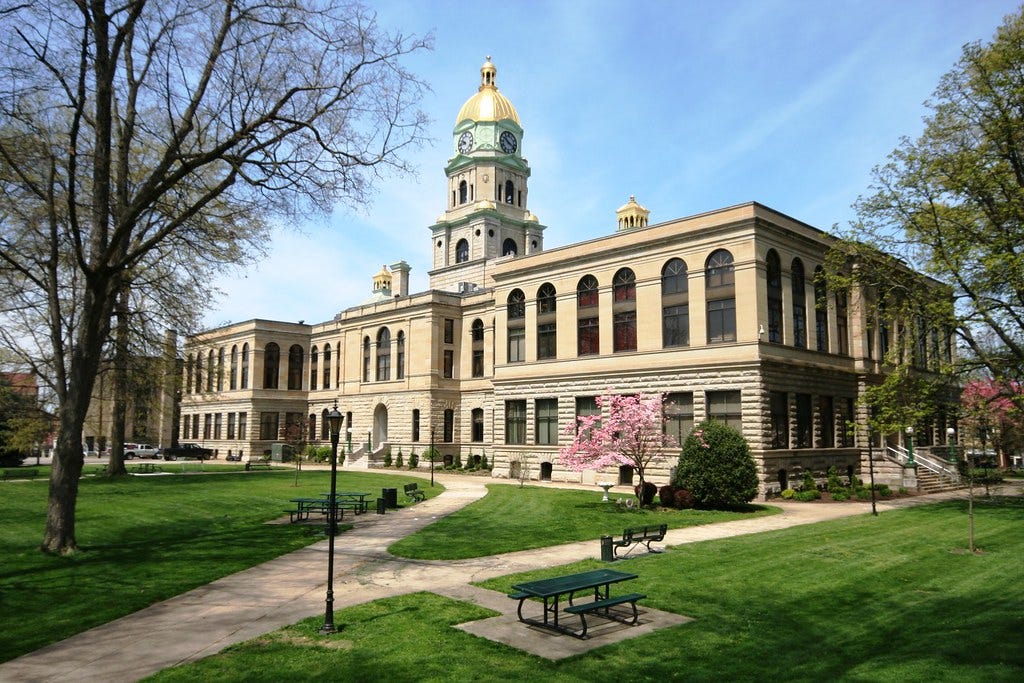
In April 2026, the West Virginia Supreme Court of Appeals reversed that dismissal 4-1. Chief Justice Bunn’s majority opinion held that the Election Code’s specific five-year statute of limitations governs election offenses, including misdemeanors, and that the circuit court had clearly erred in reaching for a general misdemeanor clock to dismiss an Election Code prosecution. The indictment was reinstated. Justice Charles Trump dissented.
Mason County Prosecutor Seth Gaskins served as special prosecutor for the trial.
On Wednesday, a Cabell County jury delivered its verdict.
What the Officials Said
Secretary of State Kris Warner was direct.
“Long gone are the days that election shenanigans go unpunished. My office will spare no expense seeking prosecution of all those who attempt to cheat the system. Even the most minimal infractions can siphon votes from legitimate candidates and disenfranchise every voter who casts a vote for an ineligible candidate.” -- Secretary of State Kris Warner
Warner called it “a huge win for election integrity” and credited Gaskins, the Cabell County Board of Ballot Commissioners, and his own investigations team.
Gaskins said he was proud to serve on a case of such importance. “Let this be a deterrent to all those who seek to undermine our institutions,” he said.
Commissioner Sobonya, who has been the most public voice on this case since 2022, posted a statement on Facebook that touched on every dimension of what happened: the residency violation, the refusal to withdraw, the federal lawsuit, the taxpayer cost, the Supreme Court appeal, and the verdict. She also addressed allegations leveled at her personally.
“For the record, I have also been accused by these individuals of running for office outside of my district. That accusation is false, and the applicable facts and public records can establish that. I will not allow false statements to continue to go unanswered. Defamatory and libelous statements are serious matters and will not be tolerated.” -- Commissioner Kelli Sobonya
The Broader Significance
The WASP noted in our earlier coverage that the Supreme Court’s April ruling was itself a significant legal precedent, establishing that West Virginia’s Election Code carries a five-year limitations window for election-specific offenses that overrides the general one-year misdemeanor clock. Wednesday’s conviction puts that precedent to work in the real world for the first time.
The case also carries a practical warning. King and Maynard were given every opportunity to step aside quietly. They were told they were ineligible. They were warned of potential prosecution. They had the ballot commissioners remove them. They then spent years in civil court trying to overturn that outcome, generating tens of thousands of dollars in legal costs for county taxpayers.
The jury looked at all of that and convicted them anyway.
“Election laws and candidate eligibility requirements exist for a reason. Following those laws is essential to protecting the integrity of the electoral process, ensuring that eligible candidates are treated fairly, and maintaining public confidence in our elections.” -- Commissioner Kelli Sobonya
The October 23 sentencing will determine what consequences King and Maynard actually face. They have not yet been sentenced. They retain the right to appeal. But the verdict is in. 🐝
The WV WASP is a West Virginia political news, humor, and commentary outlet. wvwasp.com | @wvwasp on X.